
The National Shelter Movement of South Africa (NSMSA) notes the appointment of Minister Dina Pule as Minister of Social Development following a period of public concern regarding leadership, governance and accountability. It is a pivotal moment for the department and for the millions of vulnerable South Africans who rely on its services.
“Leadership transitions inevitably create uncertainty, but our priority remains unchanged. Social protection systems are often only visible when they fail, which is why stability, integrity and effective governance within the department are so important,” says Greer Schoeman, Non-Executive Board Member of the National Shelter Movement of South Africa.
The appointment comes at a time when the Department of Social Development (DSD) has faced significant public attention and ongoing challenges that have highlighted the importance of stable leadership, effective governance and renewed public confidence. For the NSMSA, the priority is clear – ensuring that the department is able to deliver consistently and effectively on its mandate to protect and support South Africa’s most vulnerable communities.
“The Department of Social Development is one of the cornerstones of South Africa’s social protection system. It supports women, children, older persons, people with disabilities and survivors of gender-based violence (GBV). For organisations providing frontline services, stable leadership, ethical governance and effective administration are essential to ensuring that support reaches those who need it most. Women and children fleeing violence, and other vulnerable South Africans, cannot afford disruption to the services they depend on,” says Schoeman.
The appointment has understandably generated significant public debate around accountability, ethical leadership and public confidence in government. Given the significant responsibilities entrusted to the Department of Social Development, public confidence in its leadership is essential. The NSMSA believes that transparent governance, sound oversight and ethical leadership are fundamental to strengthening the department and ensuring that public resources reach the communities they are intended to serve.
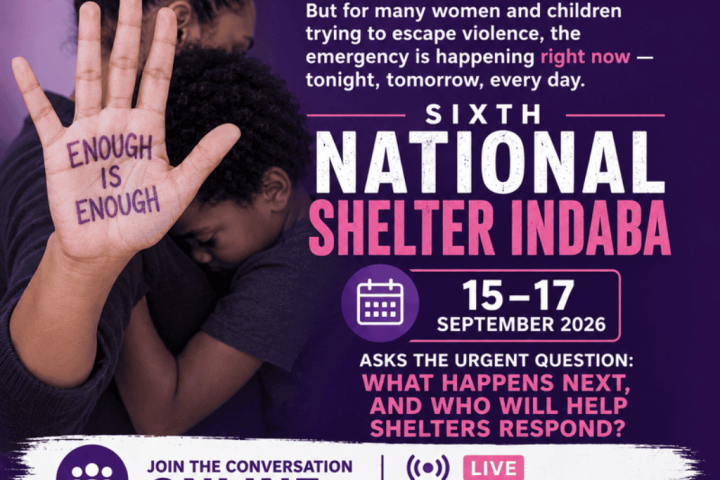
Representing a network of more than 100 shelters across all nine provinces, the NSMSA regards shelters as essential infrastructure within South Africa’s response to gender-based violence and the country’s broader social protection system. The NSMSA has consistently called for meaningful political engagement, predictable and sustainable funding, and stronger partnerships between government and civil society.
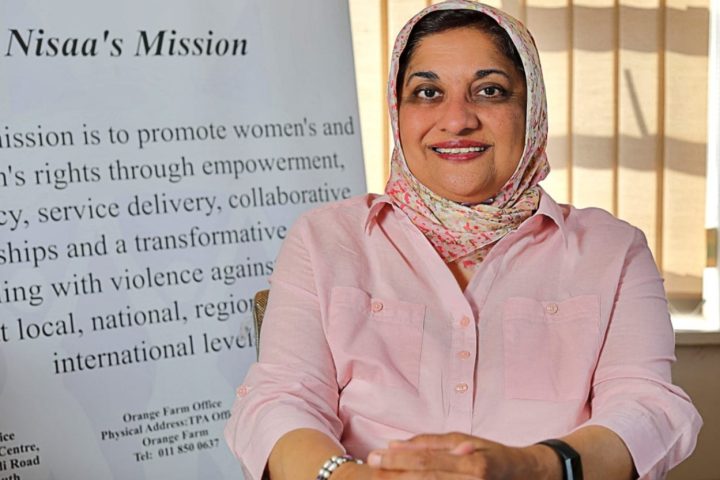
“Predictable and sustainable funding remains one of the sector’s most pressing priorities,” adds NSMSA’s National Coordinator, Anisa Moosa. “Without it, shelters struggle to retain skilled staff, maintain essential services and plan beyond the next funding cycle. Yet these organisations provide life-saving support to survivors every day.”
The NSMSA looks forward to engaging constructively with Minister Pule and the Department of Social Development to address the urgent challenges facing the shelter sector.
“Our members have practical, community-informed solutions to many of the barriers preventing survivors from accessing the protection and support they need. Through our national network, we also bring extensive research, operational experience and evidence from frontline services that can help inform practical, sustainable solutions,” Moosa says.
According to Moosa, “One of the most urgent issues requiring attention is the funding model for shelters. Delayed funding, unsigned service level agreements, administrative bottlenecks and unspent allocations continue to undermine the sector’s ability to plan, retain skilled staff and provide uninterrupted services to survivors. These are longstanding systemic challenges that require collaborative, practical solutions.”
The NSMSA says that South Africa needs is a Department of Social Development that fully recognises the role of non-profit organisations and shelters as essential partners in the country’s response to gender-based violence. Every day, shelters carry much of the responsibility for protecting and supporting women and children escaping violence. By working more closely with civil society, government can strengthen service delivery, expand its reach and ensure that more survivors receive the support they need to rebuild their lives.
“The coming months present an important opportunity to rebuild trust through meaningful engagement, predictable support for frontline organisations and practical collaboration. The shelter sector stands ready to contribute its expertise, experience and community-based knowledge to strengthen South Africa’s social protection system in the interests of survivors and the communities we collectively serve. We hope that this willingness will be matched by an equally strong commitment from government to meaningful engagement, predictable support and accountable leadership” says the organisation.
South Africa does not lack expertise or commitment within the GBVF sector. Across more than 100 shelters, communities are already doing this work every day. What is needed now is a Department that is prepared to work alongside them in a spirit of partnership, integrity and shared purpose.
Do You or Someone You Know Need Help?
Contact the National GBV Shelter Helpline (Toll-free, 24/7): 0800 001 005 or SMS/WhatsApp/Please Call Me: 082 057 8600 | 082 058 2215 | 072 230 7147 or Email: infohelpline@nationalsm.org.za.
To support the NSMSA’s campaign, please visit: A United Voice Against GBVF | Back-a-Buddy
For more information, follow us on Facebook, Twitter and YouTube.