As South Africa prepares to commemorate thirty-two (32) years of Freedom Day on 27 April, the National Shelter Movement of South Africa (NSMSA) is calling for urgent national reflection on what freedom truly means in a country where gender-based violence and femicide (GBVF) has now been classified as a national disaster.
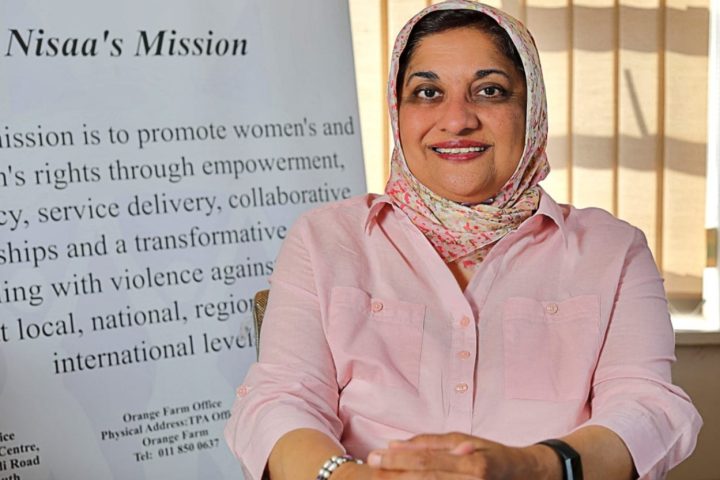
“This classification formalises what shelters across the country have witnessed for years – that domestic violence is not a private matter, but a national emergency affecting thousands of families every day,” says Greer Schoeman, NSMSA Board Member. “It also signifies that the scale of harm facing women and children is comparable to any other national crisis. Why then are traumatised survivors still expected to navigate complex legal systems, often without support?”
Protection Orders Are Critical – But the Process Fails Survivors in Crisis
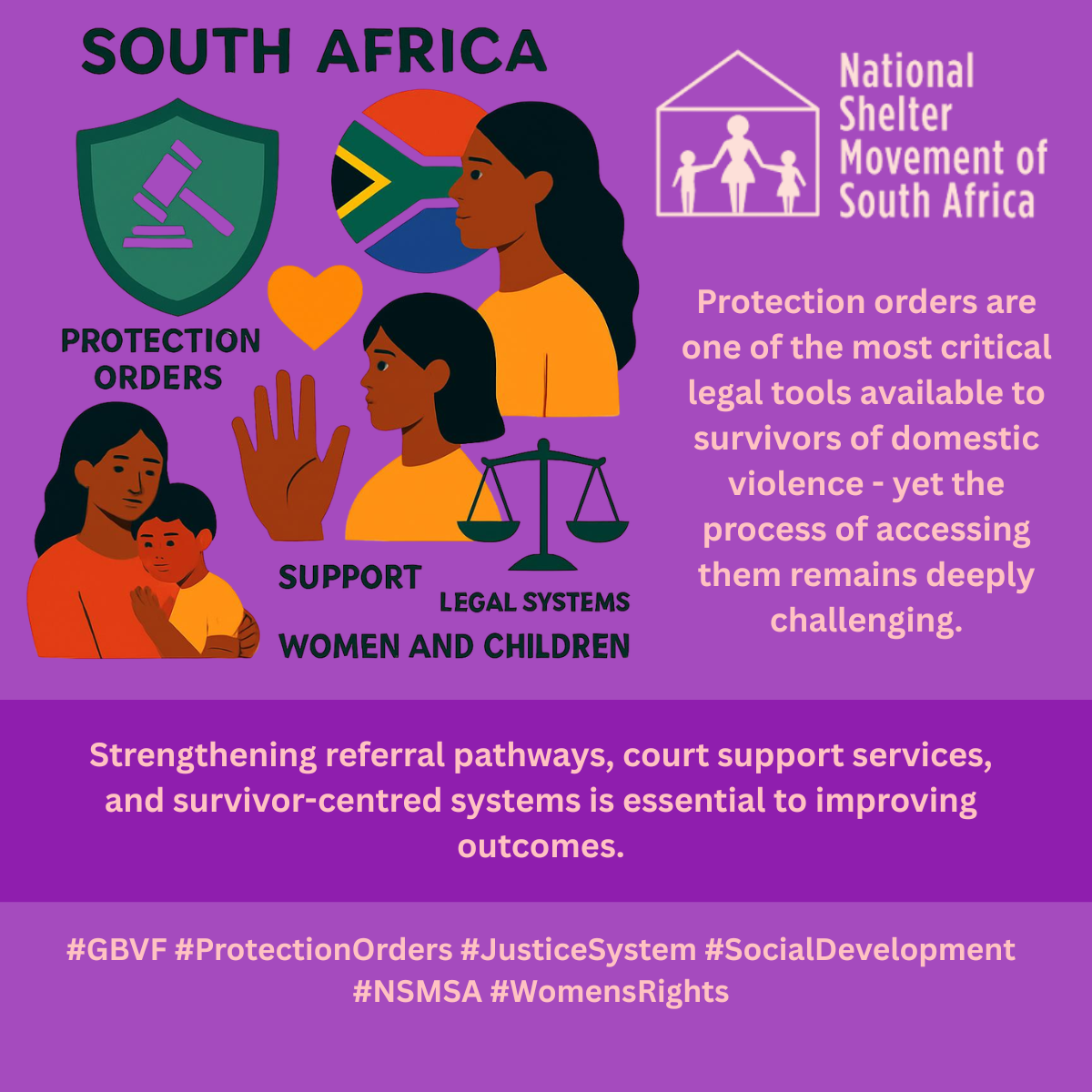
Applying for a protection order – one of the most important legal tools available to survivors – often requires an unrealistic level of recall, clarity and emotional readiness from individuals in crisis. Many women arrive at court having just fled violence, often in shock, without documentation and without assistance.
Across South Africa, shelters – supported by NSMSA – provide immediate refuge, safety planning, psychosocial care and practical support to survivors escaping abusive homes. These services frequently serve as the first point of safety for women and children who have nowhere else to turn. National crime statistics from the South African Police Service indicate that 5400 women are murdered annually in South Africa, while 63 000 domestic violence cases reported annually continue to demonstrate the scale and urgency of the crisis and the need for stronger protection mechanisms for survivors of domestic violence.
Survivor-Centred Support Must Come Before Legal Processes
Schoeman emphasises that while protection orders remain one of the most critical legal tools available to survivors of violence, the process of accessing them must be grounded in survivor safety and support.
“In the current context, we must be clear about what works. Safety and support must always come first. Before survivors are expected to engage with the justice system, the priority must be securing immediate safety for women and their children. That means effectively amplifying GBV helplines and strengthening referral pathways so that survivors are connected to community-based services without delay,” she says.
The classification of GBVF as a national disaster places responsibility on all sectors – including policing, justice services and social support systems – to respond in a coordinated and urgent manner. For shelters, this recognition reinforces their role as essential components of the country’s safety infrastructure. Despite this, shelters across the country continue to operate under chronic funding constraints. Many are required to respond to increasing demand while working with limited resources, supporting survivors who often arrive traumatised, displaced and in urgent need of protection.
System Gaps Undermine Protection Despite Legal Advances
“We also need to scale up proven community models. Programmes such as MOSAIC’s court support model show what effective, survivor-centred support looks like. They reduce case attrition and help women navigate complex legal processes. It is unreasonable to expect a woman, often traumatised and displaced, to manage this process on her own. Even modest investment in court support services can significantly improve outcomes across the criminal justice system,” adds Schoeman.
“Finally, every police station must have a properly functioning Victim-Friendly Room. Completing a protection order is not an administrative exercise – it is a deeply personal and often retraumatising process. The current gap of approximately 90 Victim-Friendly Rooms in SAPS facilities is not a minor infrastructure issue. Even where these rooms exist, quality and accessibility remain inconsistent, and this must be addressed as part of the national response to GBVF,” she says.
The NSMSA emphasises that public awareness remains one of the most significant barriers to safety. “Many individuals remain unaware of their rights or the steps required to access protection,” she says. “Public education is essential to ensure survivors understand the protections available to them and can act before violence escalates.”
Stronger Laws, Shared Responsibility for Survivor Safety
The gender justice organisation notes that recent amendments to South Africa’s domestic violence legislation have strengthened available protections, including broader definitions of domestic violence and additional mechanisms aimed at improving survivor safety. However, legal reform alone cannot address the crisis without accessible support services and informed communities.
As Freedom Day approaches, NSMSA is urging South Africans to recognise that freedom is not measured only by constitutional rights, but by the safety and dignity experienced in everyday life. For many survivors, the ability to live without fear is the most meaningful expression of freedom. In a country where GBVF has been formally recognised as a national disaster, ensuring access to protection, safety and support is not optional – it is a national responsibility.
If You Need Help – Or Know Someone Who Does? *Share widely
National GBV Shelter Helpline (Toll-free, 24/7): 0800 001 005
SMS/WhatsApp/Please Call Me: 082 057 8600 | 082 058 2215 | 072 230 7147
Email: infohelpline@nationalsm.org.za
To support the NSMSA’s campaign, please visit: A United Voice Against GBVF | Back-a-Buddy
For more information, follow us on Facebook, Twitter and YouTube.