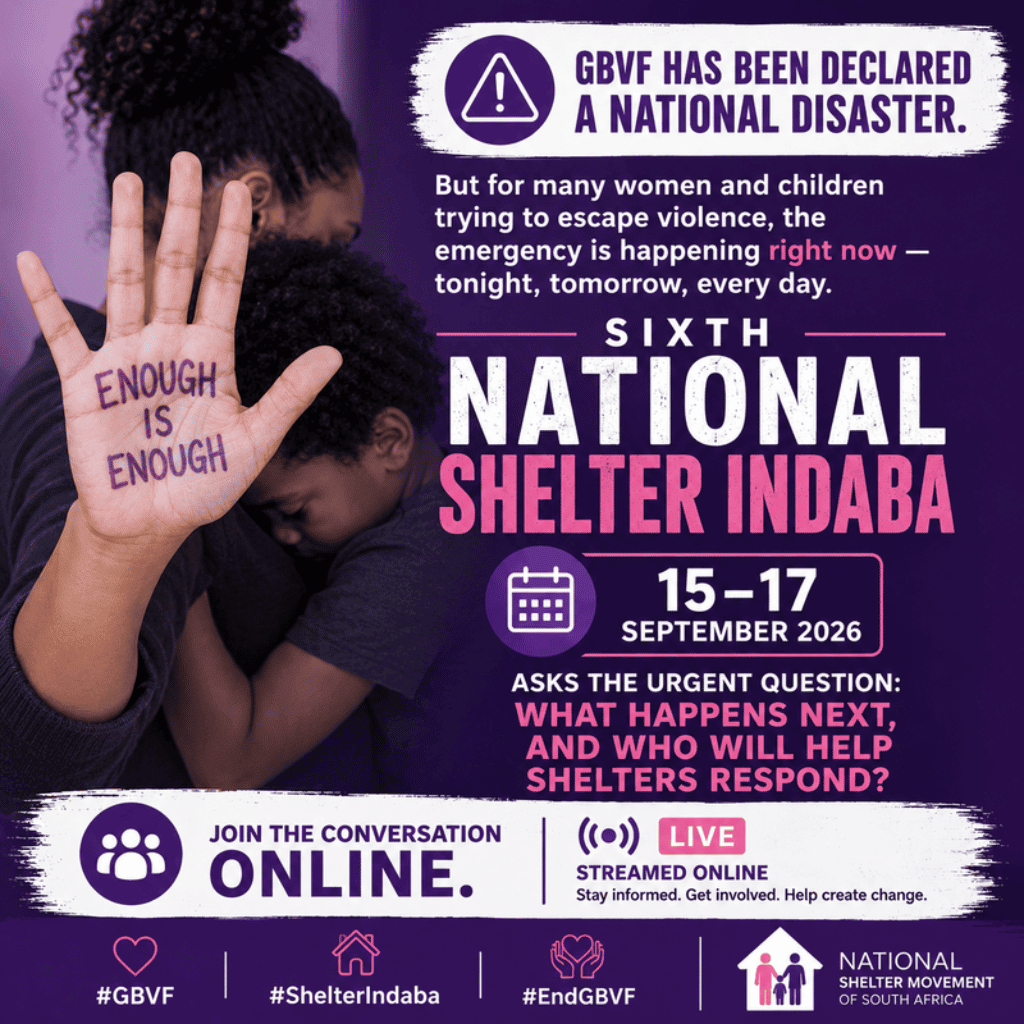
Johannesburg, South Africa – Nearly a year after gender-based violence and femicide (GBVF) was classified as a national disaster, South Africa’s frontline shelter sector says the response remains far too slow – and that the organisations supporting survivors are themselves struggling to survive. In two weeks, the National Shelter Movement of South Africa (NSMSA) will host the Sixth National Shelter Indaba (from 15–17 September 2026), bringing together the voices and experience of the shelter sector at a defining moment in the country’s response to GBVF. The NSMSA supports around 100 shelters across South Africa, with approximately 90% struggling with funding and other forms of support, despite providing essential frontline services to survivors.
“When we talk about GBVF as a national disaster, we must understand what that means in the life of a woman trying to escape violence. A national disaster requires an urgent response, yet shelters – the places where survivors find safety, begin to recover and access mental-health support, legal assistance and help for their children – are struggling for the resources they need to do this work. Far too many nonprofit organisations are struggling to stay afloat. If GBVF is truly being treated as the national emergency that it is, shelters must have access to the resources required to respond. Survivors need more than a safe place for one night – they need a realistic pathway beyond survival.”
A National Disaster – But What’s Happening on the Ground?
The NSMSA is calling on civil society organisations, policymakers, funders, researchers, media, community leaders, frontline workers and members of the public to join the Indaba online and help make this the movement’s biggest digital audience yet. The aim is to move the GBVF conversation beyond statistics and daily headlines and into the realities confronting survivors and the organisations supporting them every day.
“For a woman escaping violence, the response to GBVF can mean finding somewhere safe to sleep, securing a protection order, accessing legal assistance, dealing with trauma, finding mental-health support, caring for children who have also been exposed to violence and, ultimately, finding a way to rebuild an independent life.”
The Indaba – which will be livestreamed on NSMSA’s social media – will build on the work of previous gatherings and examine progress against commitments and resolutions made since the first Indaba in 2020. This includes national public education and advocacy, publication of the Action Learning Shelter Model Handbook, and continued work around shelter funding, oversight and implementation of the National Council on GBVF framework. The programme will also focus on the long-term conditions survivors need to move from survival towards sustainable social and economic integration, including financial empowerment – particularly relevant to South Africa’s 2026 Women’s Month theme, “Empowered Women Empower the Nation.”
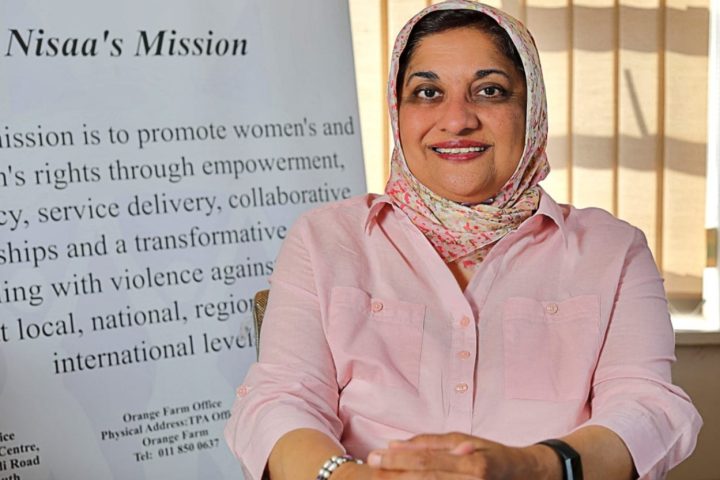
The appointment of Dr Zubeda Dangor – NSMSA’s Head of the Executive – to the National Council on GBVF creates another important link between frontline shelter experience and national policy. “For the shelter movement, we believe that Dr Dangor is one of the best people to ensure that national commitments translate into practical improvements on the ground. And it will be valuable to have her in the room, when we unpack the National Strategic Plan for GBVF and directly examine the relationship between policy and practice, national plans and provincial realities, and the resources required to deliver them.”
Since the first Indaba in 2020, the NSMSA has used the platform to strengthen shelter practice, public education and advocacy, while creating space for shelter organisations and their partners to share knowledge, raise difficult policy questions and build relationships across sectors. The organisation is also increasingly connecting this work to the broader African shelter movement. The first-ever Africa GBV Shelter Indaba takes place in Kenya, this November, while South Africa is bidding to host the 6th World Conference of Women’s Shelters in 2028.
GBVF IS A National Disaster That Still Requires Fundraising
“With so many of the NSMSA’s member shelters struggling with funding and other support, we continue to raise funds to support the shelter sector and the survivors who depend on them. It is heartbreaking that shelter teams have to leave their essential work with survivors to focus on fundraising, which has also become an essential part of the job. Fundraising is not a substitute for an adequately resourced national response. It is a reflection of the reality that shelters cannot wait for systems to catch up while women and children remain in danger.”
It costs a shelter around R300 per person per day to cover living expenses and provide support services. This includes food, toiletries, facilities and maintenance, and also water and electricity, in addition to counselling services and skills development programmes. Shelters need help; we cannot do this on our own.
Do You or Someone You Know Need Help?
Contact the National GBV Shelter Helpline (Toll-free, 24/7): 0800 001 005 or SMS/WhatsApp/Please Call Me: 082 057 8600 | 082 058 2215 | 072 230 7147 or Email: infohelpline@nationalsm.org.za
To support the National Shelter Helpline, please visit: A United Voice Against GBVF | Back-a-Buddy
For more information, follow us on Facebook, Twitter and YouTube